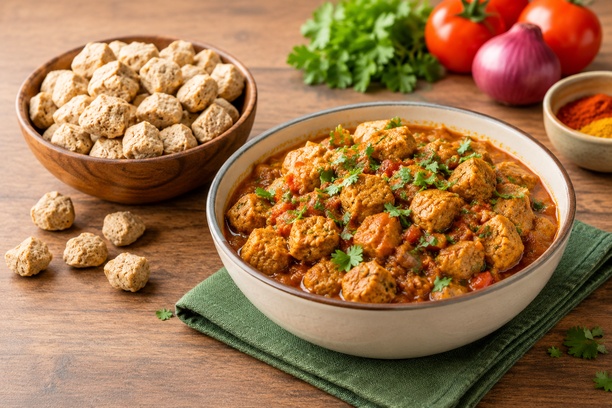
The use of soya chunks has become common in Indian households, particularly for those who are searching for inexpensive yet flexible plant-based protein options. Due to their tough texture, bland taste, and capability to absorb spices, soya chunks can be used in numerous Indian dishes. Be it spicy soya chunks curry, pulao, or biryani, there is nothing better than incorporating soya chunks in your meal plans and making each meal more enjoyable and tasty.
The soya chunks are manufactured using defatted soya flour, which is extracted after removing the oil from the soya beans. These are cut into pieces, dried, and then soften by soaking or boiling them in water. Due to their texture, these are commonly used in place of meat in vegetarian dishes. They tend to imbibe the taste of marinades, gravies, and spices.
The first and foremost property of soya chunks that comes into everybody’s mind is the presence of protein. Depending upon the type and the way soya chunks are prepared, the quantity of nutrition may vary but, 100g of dried soya chunks yield roughly 50 grams of protein. Soya chunks also consist of other nutrients like dietary fibre, iron, etc. Their nutritional values may differ from brand to brand; hence, it’s always recommended to go through the nutritional values stated on the packaging.
Protein is a significant factor in maintaining muscles, repairing tissues, and performing many bodily functions. Soy chunks are an easy source of protein for vegetarians to incorporate in their diet. They can be mixed with vegetables, grains, and beans to make complete meals.
The soyabean chunks are sources of proteins as well as other nutrients which can assist in having a nutritious and balanced diet. Adding these to vegetables and cereals can be an advantage.
The most outstanding benefit of using soya chunks is that they are versatile. Soya chunks can be used to prepare curries, pulao, biryani, wraps, sandwiches, and stir-fried foods.
The chunks of soya are light and easy to store and cook. Soya chunks are very useful especially for those who need easily accessible sources of protein for their everyday cooking needs.
Proper preparation of the soya chunks improves their texture and flavor.
For a better flavor, you can marinate them with the spices like ginger garlic paste, turmeric, chili powder, and other seasonings.
Here are some of the most delightful ways of incorporating soya chunks in Indian cuisine:
These options make it easier to enjoy variety without changing your usual cooking routine.
Make sure to look at the packaging, ingredients, expiration date, and storage directions prior to buying soya chunks. Make sure that the product you buy has packaging that is unbroken and is free from moisture and damages. Store them in a dry and cool environment in an airtight container.
Soya chunks are a versatile and easy-to-use food product that easily complements Indian cuisine. High protein content, ease of cooking, and their ability to take in flavors make them applicable not only in the making of curries but also in preparing dishes like pulao and biryani. Soya chunks can be cooked together with vegetables, pulses, and whole grains in order to add variety to daily meals and try to achieve balanced nutrition.
Haldi in Indian Traditions: The Golden Spice Beyond the Kitchen
September 16th, 2026
How to Check Tea Quality at Home: A Simple Guide to Better Tea
September 8th, 2026
 App Store
 Play Store