
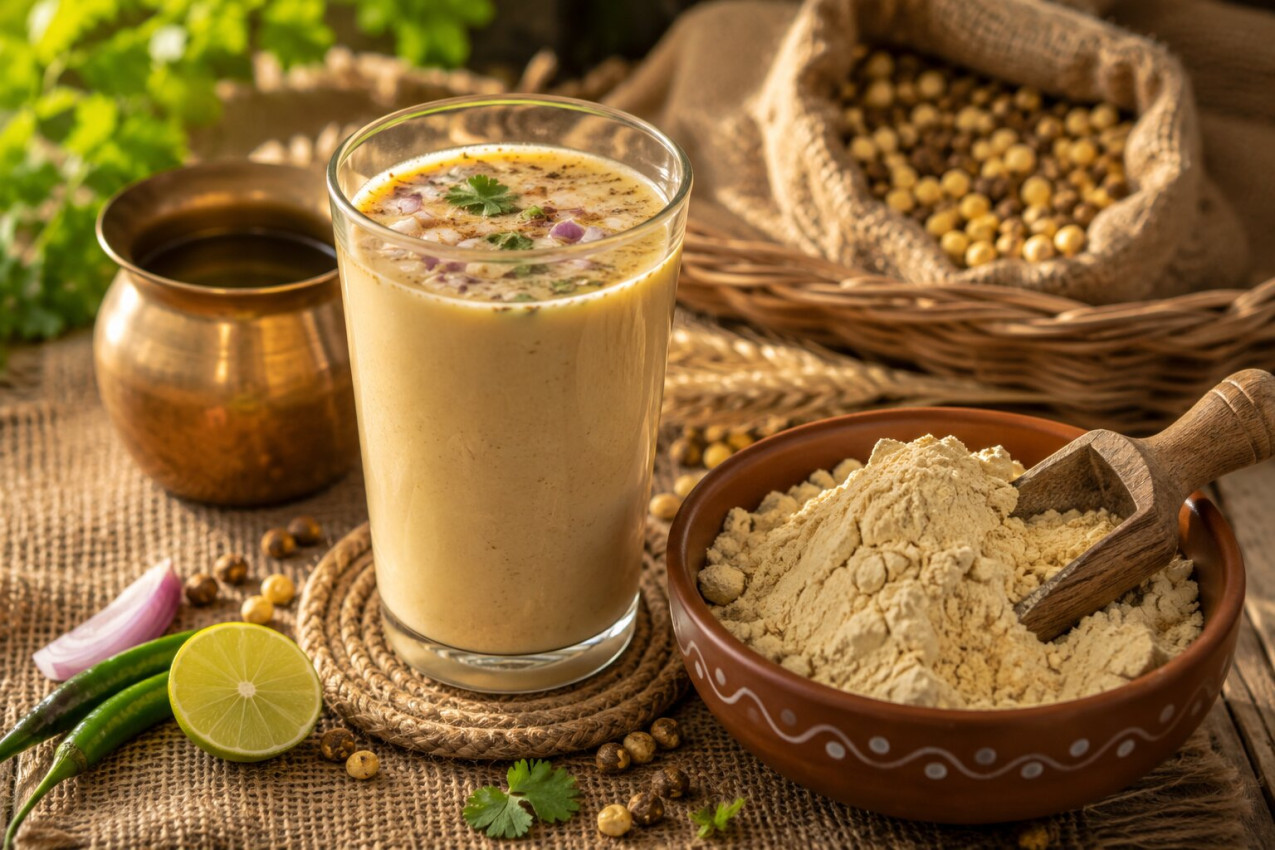
During a scorching summer day, when the sun is blazing, nothing beats the refreshment that sattu offers in the form of a cool beverage. Sattu is an indigenous Indian drink that is rustic, simple, and very close to the daily life of Indians. It has been a favorite of many Indians for years now. What was once considered a survival food in villages has now become a part of the cuisine of India.
The history of sattu is not an urban one. It is an ancient tradition associated with the village life, farming, cooking methods, and the eating practices of Indian homes. Sattu was prepared by grinding roasted grains and legumes to form flour that was easy to store and prepare. This made it an ideal option for creating a hearty and delicious meal or beverage during times when complicated meals were not an option.
For many years, farmers and those working in the field required foods that were easy to make and easy to eat on busy days. The consumption of sattu became quite common in this context.
Preparation of the mixture was not difficult at all. Just adding sattu in some water, salt and a little spice would do the trick to make a good drinkable concoction.
This simplicity is one of the reasons sattu continues to hold a special place in traditional Indian food culture.
The preparation of sattu has varied from place to place within India. Each area has brought its own twist to this humble product in order to make different uses of it.
In some places, sattu is combined with water and spices to prepare a tasty beverage, while in others it is utilized as the filling for dishes like litti. There are countless ways in which this humble ingredient has found its way into regional cuisine.
The old-fashioned sattu has been always known for its earthly taste and simplicity. With the addition of an artfully created combination of spices, it gets one more flavor which is known to us as Masala Sattu.
Masala Sattu contains both the taste of roasted chana and spicy taste of Indian spices. It can be made as a beverage and also used in regular recipes.
An ordinary glass may be prepared by simply combining masala sattu with water and then adding the required amount of water to create the desired consistency.
The charm of this process comes from the fact that one need not put in much effort. With a few basic ingredients, a common flour turns into something distinctive.
Food is often laden with memories and so is sattu. Imagine yourself in a village setting, in the courtyard, in the heat of an afternoon, drinking out of a traditional glass made from either metal or clay. Sattu and family members around you would make those moments unforgettable for generations to come.
Sattu is indicative of a type of cuisine that did not require complex techniques and a long list of ingredients. It used basic local produce to its full potential.
Sometimes, the most memorable foods are the simplest ones.
In the present day and age, convenience is one of the key factors that influence the cooking process and the manner in which the meals are consumed. However, despite being one of the traditional ingredients, the sattu finds its place in modern cooking because of its versatility.
The Masala Sattu product enhances the versatility and the convenience of the traditional ingredient and turns it into a constituent of either a hurried breakfast, a savoury drink in the evening or simply one of the additions to traditional dishes.
Travelling through the path from the farms to the kitchens of the villages and from the traditions of eating food to today's busy life, the sattu has preserved its desi identity all along the way.
This story of the ingredient is a vivid demonstration of the fact that good food does not have to be very complicated.
Haldi in Indian Traditions: The Golden Spice Beyond the Kitchen
September 16th, 2026
How to Check Tea Quality at Home: A Simple Guide to Better Tea
September 8th, 2026
 App Store
 Play Store