
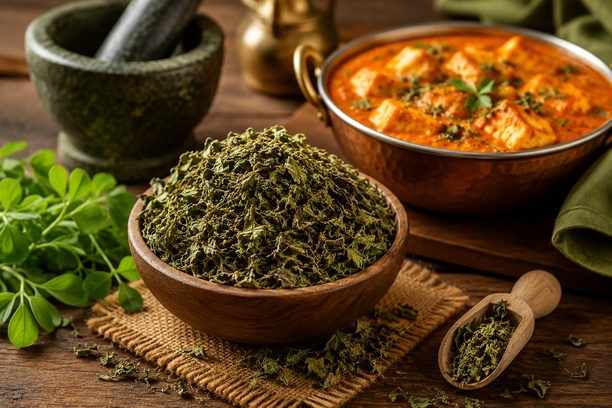
The Indian cuisine is rich with ingredients that not only have an exquisite taste but also have their own memories, folklore, seasonal cooking and much more. Kasuri methi, otherwise known as dried fenugreek leaves, is one such ingredient. Its unique smell and somewhat bitter taste make it a regular component of Indian cuisine. Furthermore, the fact that kasuri methi is associated with the traditional Indian culinary culture makes it a unique folklore ingredient of Indian cuisine.
Fenugreek has been cultivated and consumed on the Indian subcontinent for many years. Fenugreek leaves, which are referred to as methi, have been part of everyday food preparation for many years now. Dried fenugreek leaves are generally referred to as Kasuri methi.
From the name, one can tell that Kasur was renowned for growing fenugreek plants. It is also worth noting that dried fenugreek leaves gained popularity in different areas of the Indian subcontinent. They are not regarded as spices anymore but as herbs that change an entire meal using very little quantity.
There is something unique about crushing dried methi leaves in the palms before using them in a recipe. The minute the leaves get crushed, their pungent smell is emanated.
In most Indian households, this ritual holds some special memories of dishes and kitchen. A mother making a delicious curry, a grandmother completing her paneer dish, or even a cook adding the finishing touches to a gravy – Kasuri methi is used in the end, just like a signature.
This is the place where folklore and food collide. Recipes can keep changing from generation to generation, but some smells hold a special significance.
One of the most interesting characteristics of Kasuri methi is its concentrated flavour. Unlike fresh methi, dried leaves have a stronger aroma and can add depth to food in a relatively small quantity.
Traditionally, the dried leaves are gently crushed before being added to dishes. This helps release their fragrance and allows the flavour to spread through the gravy. Its mild bitterness balances rich and creamy preparations, while its earthy aroma gives dishes a more rounded character.
This is why Kasuri methi is commonly associated with North Indian cooking, particularly rich gravies, paneer preparations and vegetable dishes.
Traditions of Indian cuisine rarely restrict a particular ingredient to only one recipe. The kasuri methi can be included in various dishes such as curries, gravies, paneer dishes, vegetable dishes, and Indian bread.
The kasuri methi can even be added to the already prepared dish to give it an extra aroma. Some families add methi leaves in the dough for parathas, giving a nice herbal smell to the bread when it gets cooked.
Versatility is possibly one of the factors that have kept it alive through different styles of Indian cooking.
Not all food folklore needs to be in the form of well-known tales or even written down anywhere at all. Sometimes it can be about mundane things such as where an ingredient is kept, when it should be used, how it should be ground, or what dish the family connects it with.
Kasuri methi is one such folk tradition. The legend about it is found not in any literature but in the smells of kitchens and passed down recipes and cooking methods.
The use of kasuri methi at the end of making a thick gravy may be a very basic thing, yet it is symbolic of much more. It shows how traditions and their ingredients are still traveling through the ages.
In today’s world, Indian cuisine is savored throughout the world, and spices like Kasuri methi are no longer limited to their original kitchens. Nevertheless, the purpose is the same. Only a small amount is needed to impart its distinct smell, mild bitterness and flavor to any dish.
Maybe this is the actual folklore about Kasuri methi - not a particular story but thousands of stories that come to life while sharing meals at home and preparing traditional dishes.
Sometimes, the most powerful link to the past is not a photograph from a bygone age and is not even a story but a particular smell that comes out of the palm of your hand.
Haldi in Indian Traditions: The Golden Spice Beyond the Kitchen
September 16th, 2026
How to Check Tea Quality at Home: A Simple Guide to Better Tea
September 8th, 2026
 App Store
 Play Store