
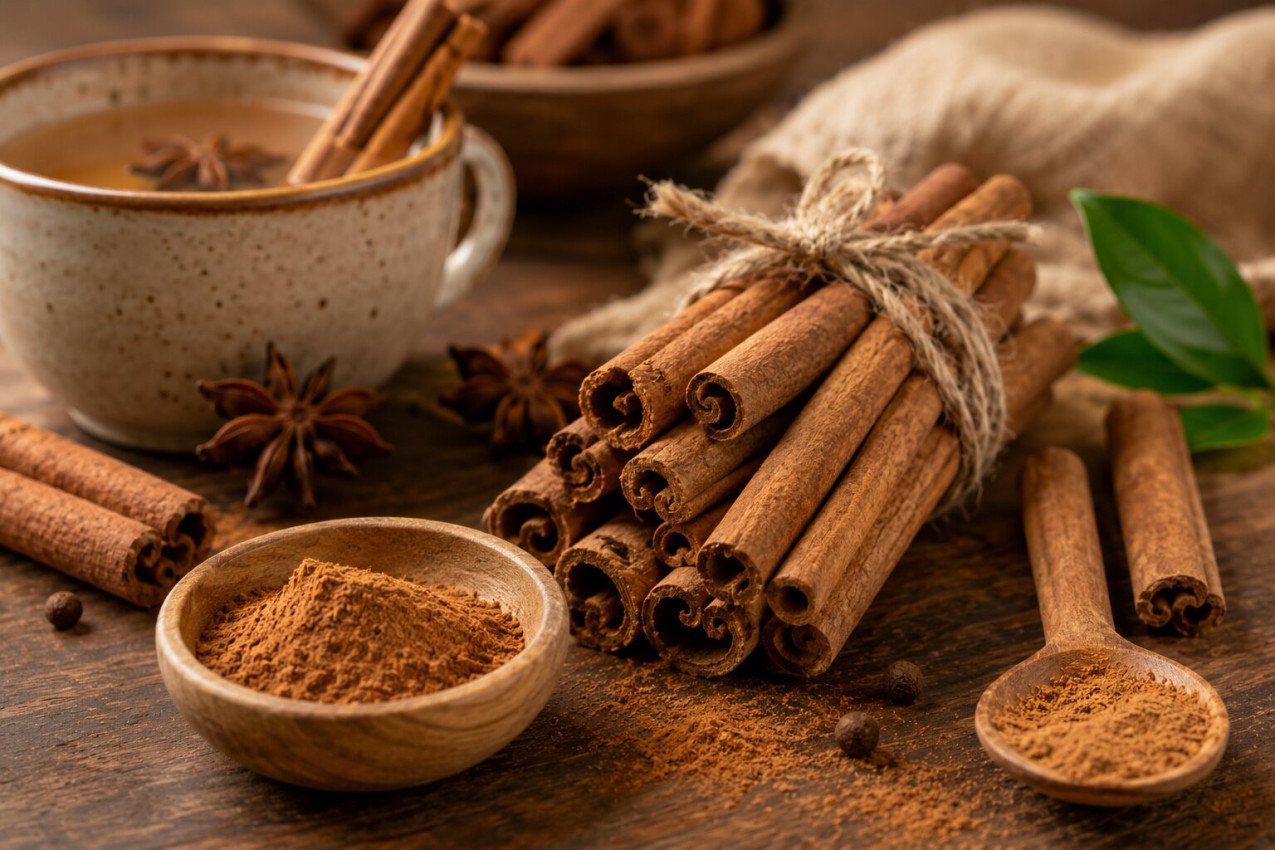
Cinnamon, or dalchini , is one of the most familiar spices in Indian kitchens. Its warm aroma and mildly sweet flavor can make even a simple dish smell and taste special. From a hot cup of masala chai to pulao, biryani, desserts and baked foods, cinnamon is used in many different ways.
But have you ever wondered where cinnamon comes from or how a simple piece of bark becomes the cinnamon stick we use in our kitchen? The story is quite interesting and surprisingly simple.
Cinnamon comes from the inner bark of the cinnamon tree . The bark is carefully removed from the tree and then dried. As it dries, it naturally curls and forms the familiar rolled cinnamon stick, also called a quill .
Cinnamon is available in different varieties. One of the well-known varieties is Ceylon cinnamon , also called "true cinnamon". It is known for its thin, delicate layers, lighter colour and gentle, sweet flavor.
Unlike thicker varieties, Ceylon cinnamon has several thin layers rolled together. This gives the quill a delicate appearance and makes it easy to break into smaller pieces when needed.
The special aroma of cinnamon comes from naturally occurring compounds in the spice. One of the most important is cinnamaldehyde , which gives cinnamon much of its familiar warm and spicy fragrance.
The flavor of cinnamon can vary depending on its variety and where it is grown. Ceylon cinnamon is generally known for having a softer and milder taste, with a slight sweetness and subtle citrus-like notes.
This gentle flavor makes it useful in recipes where you want a pleasant aroma without making the dish too strong.
The process starts with carefully selected cinnamon bark. After harvesting, the outer layer is removed and the useful inner bark is separated. The thin bark is then dried naturally. During the drying process, it curls into layers and forms the cinnamon quills we see in the market. Good-quality whole cinnamon usually has some easily noticeable characteristics:
Whole cinnamon is also convenient because you can use a small piece according to the requirement of your recipe.
Dalchini has been a familiar part of Indian cooking for a long time. It is commonly added as a whole spice while preparing pulao, biryani, curries and different masala blends . When a cinnamon stick is added to a dish while it cooks, it slowly releases its aroma. This gives the food a warm and slightly sweet background flavor. Cinnamon is equally popular in beverages. A small piece can be added to:
It is also commonly used in sweet dishes and baking. Cinnamon pairs particularly well with fruits, nuts, sugar and chocolate.
Cinnamon has been used in traditional food practices for generations. It contains naturally occurring plant compounds, including antioxidant compounds, which have made it an interesting subject of nutritional research.
However, cinnamon is best understood as a culinary spice , not as a replacement for medical treatment. Its main role in everyday cooking is to add flavour, aroma and warmth to food and beverages.
Both whole cinnamon and cinnamon powder are useful, but they work slightly differently.
Whole cinnamon is ideal when you want its flavour to slowly infuse into a dish or drink. The stick can be removed before serving.
Cinnamon powder is more convenient when you want the spice to mix completely into the preparation.
For dishes such as pulao, biryani and masala chai, many people prefer using whole cinnamon because it releases its aroma gradually while cooking.
Cinnamon may look like a simple piece of dried bark, but it has travelled a long way from the cinnamon tree to kitchens around the world. Its delicate aroma, mild sweetness and warm flavour have made it a favourite ingredient for generations.
Whether you add a small piece to your morning chai, use it in a fragrant rice dish or sprinkle some into a dessert, cinnamon can bring a distinctive character to the recipe.
Sometimes, it only takes one small piece of spice to make an ordinary dish smell extraordinary.
Haldi in Indian Traditions: The Golden Spice Beyond the Kitchen
September 16th, 2026
How to Check Tea Quality at Home: A Simple Guide to Better Tea
September 8th, 2026
 App Store
 Play Store